
Can I Just Take Antibiotics for a Tooth Infection? The Truth About Dental Pain
29 June 2026
Clinically reviewed by Dr Shaheen Alghofari, GDC-registered dentist (GDC no. 318372) at Twilight Dental, Leeds. Need to be seen today? See our emergency treatment for a tooth infection in Leeds — consultation £24 until 10pm, or call 0113 819 7865.
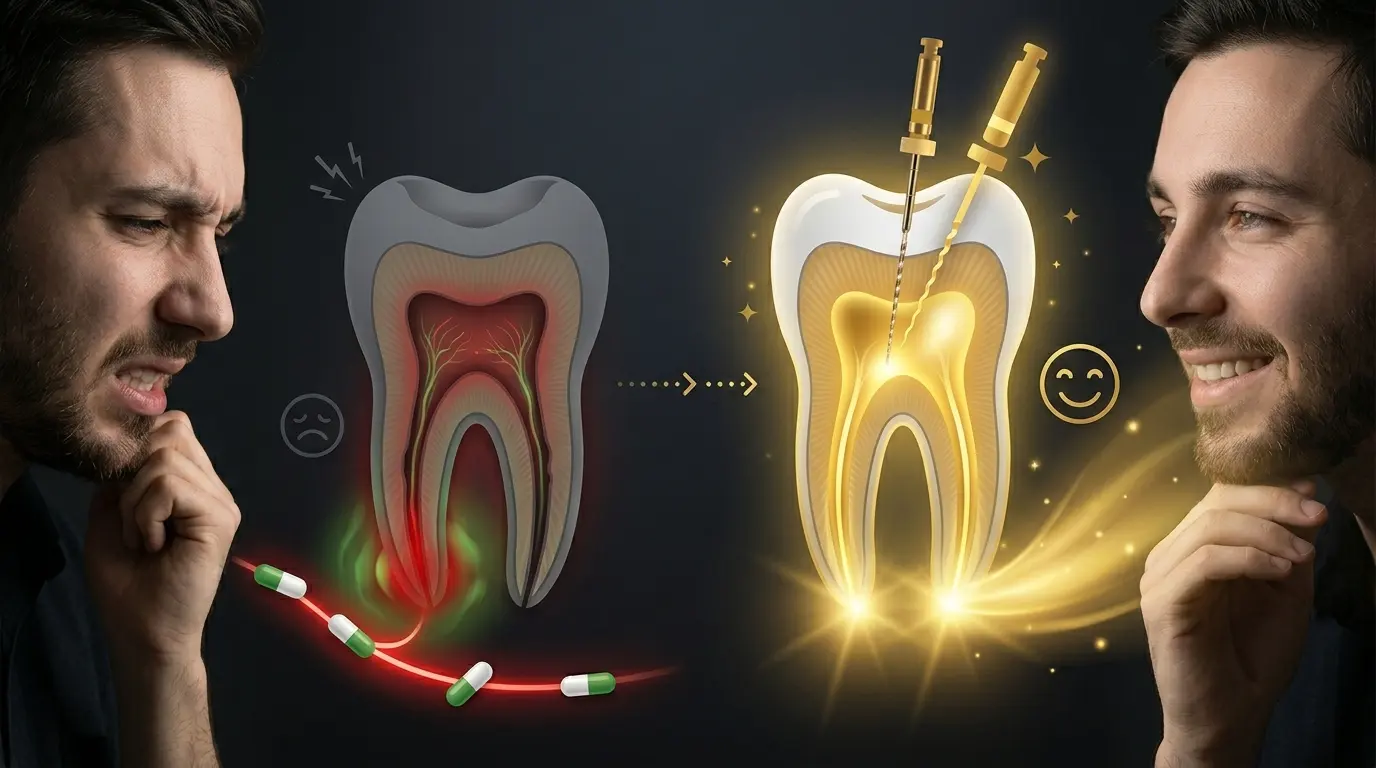
Quick answer: No. Antibiotics can calm the spreading infection around a tooth for a while, but they cannot reach the source inside the tooth or clear an abscess on their own. The infection comes back unless the tooth is treated with root canal treatment or extraction. Antibiotics are only added when there is spreading swelling, fever or you feel unwell.
When you wake up in the middle of the night with a throbbing, agonizing toothache, your first instinct is usually to look for a quick fix. Many patients call our emergency line at Twilight Dental in Leeds with one simple request: “Can you just prescribe me some antibiotics so the pain goes away?”
It is easy to understand why people think this. If you get a chest infection or strep throat, you take a course of antibiotics, the bacteria die, and you are cured. So, why doesn’t this work for teeth?
The harsh medical truth is that antibiotics alone will never cure a tooth infection. Here is the science behind why, and what you actually need to do to get out of pain.
The Anatomy of a Tooth Infection
To understand why antibiotics fail to cure a dental abscess, you need to know how a tooth works.
Deep inside your tooth is a hollow space called the root canal, which contains the dental pulp—a living mix of nerves and blood vessels. When bad bacteria from a deep cavity or a crack enter this space, the nerve becomes infected.
Because the tooth is a hard, rigid shell, the inflammation causes immense pressure to build up inside (which is why your toothache is throbbing). Eventually, the nerve dies.
Why Antibiotics Cannot Reach the Problem
Antibiotics are swallowed, digested, and absorbed into your bloodstream. They travel through your blood vessels to reach and kill infections around your body.
But here is the critical flaw: When the nerve inside your tooth dies, its blood supply dies with it. Because there is no longer any blood flowing inside the dead tooth, the antibiotics traveling in your bloodstream physically cannot reach the bacteria hiding inside the root canal. The hollow tooth essentially acts as a safe bunker for the bacteria.
The “Band-Aid” Effect: A False Sense of Security
Sometimes, a patient might take antibiotics and notice the swelling goes down and the pain slightly decreases. They think, “Great, I’m cured!” and cancel their dentist appointment.
This is a dangerous illusion. The antibiotics have only managed to kill the bacteria that leaked out of the tooth and into the surrounding gum or bone. The main source of the infection—the bacteria factory inside the dead tooth—is still active. As soon as you finish your course of antibiotics, the infection will inevitably return, and it is usually much worse the second time around.
The Only Two Ways to Cure a Tooth Infection
Because medicine cannot reach the inside of the tooth, the infection must be physically removed by a dentist. There are only two ways to do this:
-
Root Canal Treatment: The dentist drills a small hole in the tooth, physically cleans out the dead nerve and bacteria from the root canals, and seals it completely. This saves your natural tooth.
-
Tooth Extraction: The infected tooth is completely removed from your mouth, allowing the infected socket to drain and heal.
When Are Antibiotics Actually Prescribed?
Dentists do not hate antibiotics; we just use them appropriately. We will only prescribe antibiotics if the infection is spreading aggressively beyond the tooth and your immune system needs immediate help.
Signs you might need antibiotics alongside your dental treatment include:
-
Severe swelling in your face, cheek, or neck.
-
Difficulty swallowing or opening your mouth.
-
A high fever or swollen lymph nodes.
Stop Masking the Pain. Fix the Source.
Relying on painkillers and leftover antibiotics will only delay the inevitable and put your health at risk. Overusing antibiotics also leads to antibiotic resistance, meaning they might not work when you truly need them for a life-threatening illness.
If you are suffering from a dental abscess or severe toothache, you need physical intervention, not just a prescription.
At Twilight Dental, we provide fast, effective, and completely numb emergency treatments to eliminate the infection at its source.
Book an Emergency Assessment with our Leeds clinic today and let us get you out of pain for good.
📩 receptiontwilight@outlook.com
Frequently asked questions
Will antibiotics cure a tooth abscess?
No. An abscess is a pocket of infection fed by a dead or infected nerve inside the tooth, which antibiotics cannot reach. They may reduce swelling temporarily, but the tooth still needs draining and treatment, either root canal treatment or extraction, to cure it.
When does a dentist prescribe antibiotics for a tooth infection?
UK guidance limits antibiotics to cases where infection is spreading, such as facial swelling, fever, swollen glands or feeling generally unwell, or where treatment has to be delayed. They are given alongside treatment, not instead of it.
Can I get antibiotics from a pharmacy or GP for toothache?
Pharmacists and GPs will usually direct you to a dentist, because dental infections need dental treatment. If you have swelling that affects your breathing, swallowing or vision, go to A&E or call 999 straight away.
How quickly can I be seen for a tooth infection in Leeds?
Twilight Dental sees patients 24 hours a day at 1 Moor View, LS6. The consultation is £24 until 10pm and includes examination, X-rays and a written plan, and treatment can often start at the same visit.
Tooth infection? Treat the cause today
We see emergency patients in Leeds 24 hours a day. A £24 consultation covers examination, X-rays and a written plan, and we can often start treatment straight away.
Treatment pages related to this article
In pain now? Reception is answered 24 hours a day — call 0113 819 7865 or book online.